I'M A STRATEGIST,
BUILDING FRAMEWORKS
THAT DRIVE OUTCOMES
A framework that doesn't translate into action is just theory. And data without depth can't drive decisions.
FIVE PRINCIPLES
I KEEP COMING BACK TO.
Start at the cost line
Every marketing strategy ends up as a line on a P&L. I start there and work backwards. It’s the fastest way to find out which problem is worth solving.
Write before you deck
If I can’t write the thesis in a paragraph, the deck won’t save it. Every engagement starts with a memo, not a slide.
Build the measurement before the move
Changing spend without changing measurement is how you get worse data faster. Instrument first, act second.
One reframe per engagement
Clients don’t need ten new ideas. They need one correct one, pressure-tested. I bring one reframe and defend it.
Ship tools, not decks
A spreadsheet someone uses on Monday is worth more than a deck everyone loves on Friday. I ship working artefacts.
MORE THAN SEVEN YEARS,
FROM IDEAS TO OUTCOMES.
I've spent most of my career inside marketing teams and client accounts, working across performance, media, and strategy. The role was always close to execution, managing campaigns, diagnosing drops, explaining numbers, trying to move outcomes.
Over time, a pattern became clear. Most performance issues weren't campaign problems. They were decision problems, positioning, funnel structure, unclear signals in the data. That shifted my focus from running campaigns to understanding systems.
Now I spend most of my time auditing funnels, shaping positioning, and running diagnostics across acquisition, engagement, and conversion. The goal is to move beyond reporting and get to what is actually driving or blocking growth.
More recently, I've started building alongside this. Small tools to make analysis less manual and decisions more grounded. Not to replace strategy, but to make it executable.
WHO I'VE WORKED WITH.
- JLL India
- L&T Realty
- Tata Communications
- HCL Software
- Audi
- Hansaplast
- Pidilite Industries
- Saint-Gobain
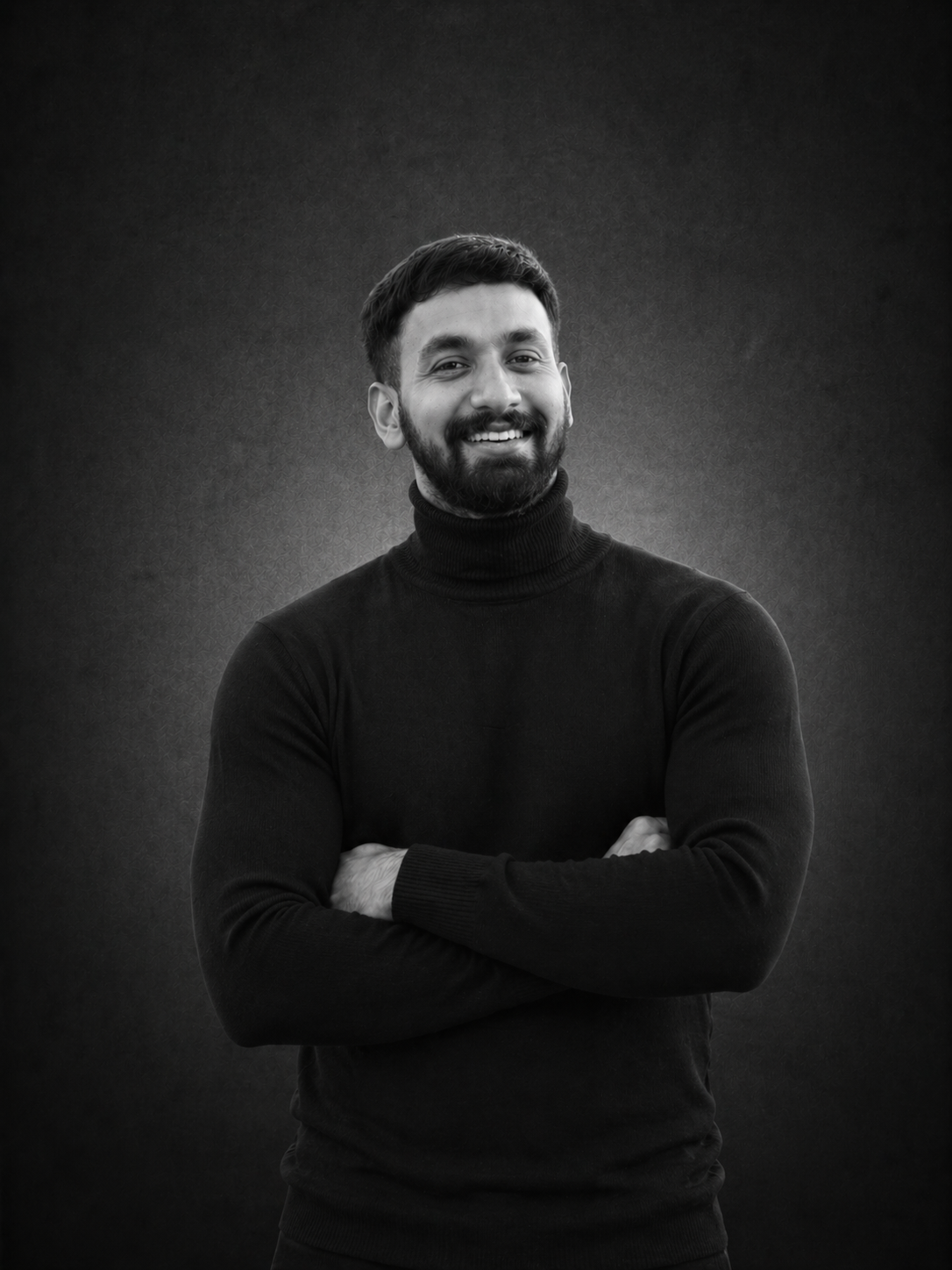
I read a lot, mostly non-fiction and a few long-running Substacks. I write slowly, revise often, and think out loud in notes. The portrait is a formality. The work is the thing.